
Zakat Calculator
Calculate your Zakat accurately according to Islamic Shariah
How to Calculate Zakat on Gold, Cash & Savings (2026 Guide)
By the NexusEase Tools Team · Last updated July 2026 · 12 min read

A colleague once told me he had been underpaying his Zakat for three years — not out of
negligence, but because he genuinely didn’t know his stored gold jewelry counted alongside his
savings. He assumed Zakat applied only to cash sitting in the bank. When he finally added
everything up correctly — cash, gold, a small stock portfolio, and a rental property he’d forgotten
to include — the difference was significant. That kind of honest mistake is more common than
people realize, especially now that Zakatable wealth can include everything from retirement
accounts to property held for resale.
This guide walks through exactly how to calculate Zakat in 2026 — the core formula, how Nisab
works, and detailed calculations for every asset category, matched to what you’ll actually enter
into a calculator: cash and bank balances, gold and silver, business and investments, rental
income and property, and deductible debts. You can also use our free Zakat Calculator to get
your exact number instantly — supports 8 currencies, uses live gold and silver prices, and runs
entirely in your browser with no signup.
How Do You Calculate Zakat? (The Core Formula)
Zakat is calculated as 2.5% of your net Zakatable wealth, once that wealth has equaled or
exceeded the Nisab threshold for one full lunar year.
Zakat Due = (Total Zakatable Assets − Deductible Debts) × 2.5%
Three conditions must all be true:
- You are a sane, adult Muslim
- Your net Zakatable wealth meets or exceeds the Nisab
- A full lunar year (Hawl) has passed since your wealth first reached the Nisab
If all three apply, the 2.5% calculation is a religious obligation — not a suggestion.
What Is Zakat Nisab in 2026, and Should You Use Gold or Silver?
Nisab is the minimum wealth threshold — measured against either gold or silver — that a
Muslim must hold for a full lunar year before Zakat becomes due; most contemporary
scholars recommend the silver standard because it is lower and includes more people in
the obligation.
| Standard | Weight | Approximate Value (July 2026) |
| Gold Nisab | 87.48 grams of gold | ~$8,000–$9,000 USD |
| Silver Nisab | 612.36 grams of silver | ~$600–$700 USD |
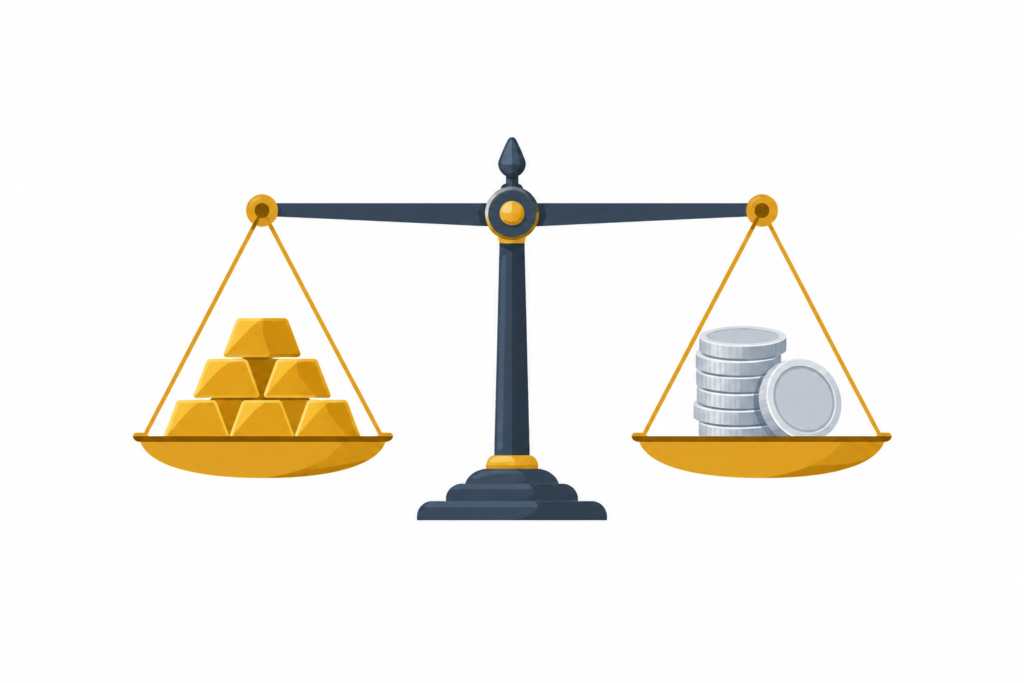
The gap between the two is large, and it’s the most common point of confusion. Because silver
is far less expensive, using the silver Nisab means more people become eligible to pay — which
means more support reaches those who need it. This is why the silver standard has become the
more widely recommended default globally, though some scholars still prefer gold as a
historically stable measure.
Bottom line: Follow your own scholar or school of thought. If unsure, silver Nisab is the more
cautious choice. Always use the current market price on your actual due date — never last
year’s figures. Our Zakat Calculator lets you enter today’s gold and silver price per gram directly,
in your chosen currency, so this step is always accurate.
Section 1: Cash & Bank Balance
Add up all cash you hold — physical cash in hand, every bank savings account, and
fixed or term deposits — then subtract any debts due within the year and apply 2.5% to
what remains.
This is the most straightforward calculation, because there’s no valuation step — cash is already
in its final form.
What to include:
● Cash in hand
● Bank savings and current accounts
● Fixed deposits / term deposits (at full value, even if technically locked for a period,
because you retain legal ownership)
Worked example: $15,000 in combined savings − $2,000 in short-term debts = $13,000 net.
Zakat due: $13,000 × 2.5% = $325
Section 2: Gold & Silver
Weigh only the pure gold or silver content of jewellery, coins, or bars — excluding gemstones and non-metal parts — multiply by the current market price per gram, and apply 2.5%; whether jewellery is included at all depends on your school of thought.
- Hanafi school: All gold and silver jewelry is Zakatable, whether worn regularly or stored away
- Shafi’i, Maliki, Hanbali schools: Jewelry worn regularly for personal use is generally exempt; stored or unworn jewelry is Zakatable
Worked example: 60 grams of pure gold × $86/gram = $5,160. Zakat due: $5,160 × 2.5% = $129
If your gold and silver alone don’t reach Nisab, combine them with your other Zakatable assets — if the combined total clears the threshold, Zakat applies to everything together.
Section 3: Business & Investments
This section covers three distinct types of wealth that are often miscalculated because each follows a different rule.
How to Calculate Zakat on Business Inventory
Business inventory or stock held for trade is Zakatable at its full current market value, not its original purchase price.
Worked example: $8,000 worth of inventory currently held for resale. Zakat due: $8,000 × 2.5% = $200
How to Calculate Zakat on Shares and Mutual Funds
For stocks held short-term for active trading, apply 2.5% to the full current market value; for shares held long-term as passive investments, apply 2.5% only to the company’s underlying Zakatable assets — typically estimated at 25–30% of the total holding’s value.
- Short-term/active trading: Total stock value × 2.5%
- Long-term/passive holding: Estimate the Zakatable portion at ~25–30% of market value, then apply 2.5% to that portion
Worked example (long-term holding): $20,000 stock portfolio held for passive growth.
Zakatable estimate: $20,000 × 30% = $6,000. Zakat due: $6,000 × 2.5% = $150
Shariah-compliant equity funds often publish their own Zakat percentage per share, which simplifies this considerably.
How to Calculate Zakat on Business Receivables
Money owed to you that you reasonably expect to collect is included in your Zakatable wealth at its full face value, the same as cash. This is one of the most overlooked categories — many people only count what’s currently in their bank account and forget money that’s owed to them but not yet received
Section 4: Rental Income & Property
This is where most Zakat guides get vague, because the rules genuinely differ depending on why you own the property — and this distinction is the single biggest source of over- or under-payment.
How to Calculate Zakat on Rental Income
Rental income itself is not taxed as a separate category — it simply becomes part of your cash total once received, and the rental property that generates it is not Zakatable as long as it’s held to produce income rather than for resale.
Worked example: $12,000 annual rental income received and still held in savings on your Zakat due date. This amount joins your Cash & Bank total and is Zakated at 2.5% along with everything else.
How to Calculate Zakat on Property Held for Sale
Property purchased with the clear intention to resell — whether a house you’re flipping, land bought as an investment, or units held for sale — is treated exactly like business inventory: Zakatable at 2.5% of its full current market value, regardless of how long the sale takes.
This is the distinction competitors most often blur together, and it matters enormously:

| Property Type | Zakat Treatment |
| Your primary home | Never Zakatable |
| Property held to rent out long-term | The property itself is not Zakatable — only the saved rental income is |
| Property bought with intent to resell/flip | Full current market value is Zakatable at 2.5%, every year until sold |
| Land held with no specific intention | Not Zakatable, as it isn’t generating income or held for trade |
Worked example: A property purchased for $150,000, currently valued at $180,000, held with the clear intention to resell. Zakat due: $180,000 × 2.5% = $4,500 — based on current market value, not the original purchase price, and due every year the property remains unsold.
Important: If your intention changes mid-way — say you originally bought to flip but later decide to rent it long-term instead — your Zakat treatment changes from that point forward too.
Is Zakat Due on Retirement Accounts, 401(k)s, and Pensions?
Zakat is due annually on 401(k) and IRA balances you have vested, legal ownership of, but scholars are genuinely divided on whether penalties and taxes should be deducted first — this is one of the most debated areas in modern Zakat calculation.
This topic is rarely covered alongside a standard calculator, yet for many working professionals it’s their largest asset after property.
Position 1 — Pay annually on net accessible value (the more cautious, widely-followed approach):
Vested Balance − Estimated Early-Withdrawal Penalty − Estimated Tax = Net Zakatable Amount Net Zakatable Amount × 2.5% = Zakat Due
Worked example: A $100,000 vested 401(k), with a 10% early withdrawal penalty and 22% estimated tax: $100,000 − $10,000 − $22,000 = $68,000 net. Zakat due: $68,000 × 2.5% = $1,700
Position 2 — Defer until withdrawal: Because funds are restricted and inaccessible without penalty, some scholars hold that Zakat isn’t owed annually — it becomes due once you gain full access (typically retirement), at which point you pay 2.5% on the full amount as a single lump sum covering all deferred years.
Defined-benefit pensions (a promised future payout rather than an owned account balance) are generally treated differently — no Zakat is due until payments actually begin, at which point each payment is treated as regular income.
Given the genuine scholarly disagreement here and the amounts often involved, this is one calculation worth confirming with a scholar familiar with your specific plan.

Is There Zakat on Cryptocurrency?
Yes — most contemporary scholars treat cryptocurrency as a Zakatable liquid asset similar to cash, applying the standard 2.5% rate to its market value on your Zakat due date.
This is one of the newest and least-covered questions in Zakat calculation, simply because crypto didn’t exist when classical rulings were formed. The prevailing view treats holdings like Bitcoin the same way it treats stock — based on current market value, not purchase price.
Worked example: Crypto portfolio currently valued at $8,000. Zakat due: $8,000 × 2.5% = $200
Section 5: Deductions (Debts & Liabilities)
Only debts and liabilities due within the next 12 months can be deducted from your Zakatable wealth — long-term debts like the remaining balance on a mortgage are not fully deductible, only the portion due within the year.
This trips up more people than almost any other step.
Deductible:
- Credit card balances due this cycle
- Rent or utility bills currently outstanding
- The next 12 months of loan installments
- Short-term business payables
Not fully deductible: The total outstanding balance of a mortgage, car loan, or long-term business loan — only the year’s installment portion.
What Is Hawl, and How Do You Track It?
Hawl is the full lunar year — approximately 354 days — that your wealth must remain at or above Nisab before Zakat becomes due; because the lunar year is shorter than the solar year, your Zakat due date shifts about 11 days earlier each Gregorian year.
Note the Hijri date your wealth first reached Nisab — that date becomes your annual Zakat anniversary. If your wealth dips below Nisab at any point, the Hawl resets and restarts once it reaches Nisab again.
Many Muslims pay during Ramadan for the added spiritual reward, which is permitted as long as payment occurs on or before your actual Hawl date.
Common Zakat Calculation Mistakes to Avoid
- Forgetting stored gold jewelry — Zakatable under most schools even if never worn
- Using outdated gold/silver prices instead of current market rates for the Nisab check
- Confusing rental property with flip property — the two follow completely different rules
- Deducting the full mortgage balance instead of only the year’s installment
- Overlooking retirement accounts entirely — a genuine oversight given how little this is covered elsewhere
- Checking Nisab per asset category separately instead of combining all Zakatable wealth first

No. Zakat is a mandatory annual obligation with specific eligible recipients defined in the Quran. Sadaqah is voluntary charity that can be given to anyone, at any time, in any amount.
Yes, provided the full amount owed is paid by your Hawl date.
Your Hawl resets. The countdown restarts once your wealth reaches Nisab again, and no Zakat is owed for the interrupted period.
Yes — if the property was purchased with the intention to resell, it remains Zakatable at its current market value every year until it sells, regardless of how long that takes.
Yes, if you reasonably expect repayment — the amount owed to you is included at face value.
The majority scholarly opinion restricts obligatory Zakat to Muslim recipients within the eight categories defined in the Quran. Voluntary Sadaqah can be given to anyone regardless of religion.
Frequently Asked Questions
Is Zakat the same as Sadaqah? No. Zakat is a mandatory annual obligation with specific eligible recipients defined in the Quran. Sadaqah is voluntary charity that can be given to anyone, at any time, in any amount.
Can I pay Zakat in monthly installments? Yes, provided the full amount owed is paid by your Hawl date.
What happens if my wealth drops below Nisab during the year? Your Hawl resets. The countdown restarts once your wealth reaches Nisab again, and no Zakat is owed for the interrupted period.
Is Zakat due on a property I’m still trying to sell? Yes — if the property was purchased with the intention to resell, it remains Zakatable at its current market value every year until it sells, regardless of how long that takes.
Do I pay Zakat on money I’ve lent to someone? Yes, if you reasonably expect repayment — the amount owed to you is included at face value.
Can Zakat be given to non-Muslims? The majority scholarly opinion restricts obligatory Zakat to Muslim recipients within the eight categories defined in the Quran. Voluntary Sadaqah can be given to anyone regardless of religion.
Calculate Your Zakat Now — Free, Private, No Signup
Our Free ZakatCalculator covers every category in this guide — Cash & Bank Balance, Gold & Silver, Business & Investments, Rental Income & Property, and Deductions — with live gold and silver prices across 8 currencies. Everything runs privately in your browser. Nothing is stored, and there’s no donation prompt at the end.
About this guide: The calculation principles reflect the broad scholarly consensus across the Hanafi, Shafi’i, Maliki, and Hanbali schools of thought. Where scholars genuinely disagree — particularly on jewelry, retirement accounts, and long-term stock holdings — both major positions are presented rather than a single answer. For complex situations involving multi-country holdings, inheritance, or business partnerships, consulting a qualified Islamic scholar is always recommended. This guide is reviewed annually to reflect current Nisab values and evolving scholarly positions on modern financial instruments.
Noticed an asset type not covered here? Reach out to the NexusEase team and we’ll look into updating this guide.